
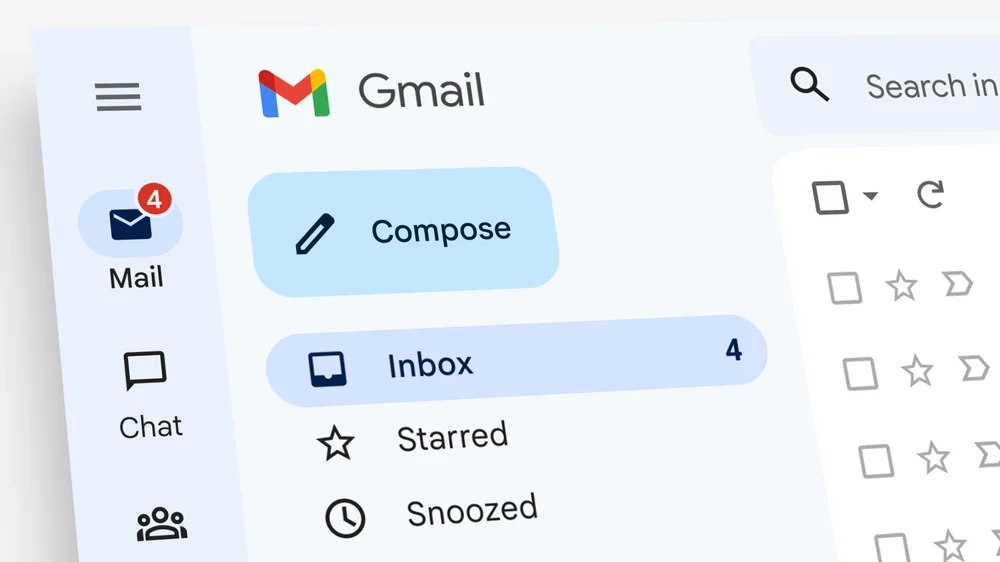
Almost every app login, password reset, purchase receipt, and legal contract still lands in an email inbox. Decades after the birth of the web, our digital identities remain anchored to a protocol created in the era of mainframes. While platforms from IRC to Slack have tried to replace it, email remains the universal passport of the internet. Its staying power is no accident—it is the result of a few pragmatic engineering hacks that grew into the planet’s most resilient communication network.
Before the Inbox
Long before computers connected across cities, digital messaging was confined to single, shared mainframes. In the mid-1960s, systems like MIT’s Compatible Time-Sharing System (CTSS) allowed researchers to log into a central computer from separate terminals. Users could leave simple text files in a shared directory for colleagues using the same physical hardware. It was effectively a digital bulletin board—useful for shift notes, but incapable of sending a message outside the room.
That boundary broke in 1971 thanks to Ray Tomlinson, a computer engineer at Bolt Beranek and Newman (BBN), the contractor building ARPANET. Tomlinson was experimenting with two distinct programs:
- SNDMSG: A local messaging tool that allowed users on the same PDP-10 computer to write notes to one another.
- CPNET: An early file transfer protocol designed to move files between host computers across ARPANET.
Tomlinson realized he could adapt CPNET to append text directly to mailbox files across the network rather than just transferring files locally. In late 1971, he sent the first network email between two PDP-10 computers sitting side-by-side in his Cambridge, Massachusetts laboratory. While the exact text was lost to history—Tomlinson later recalled it as something forgettable like “QWERTYUIOP”—the mechanism changed computing forever.
To direct messages across the network, Tomlinson needed a way to separate the recipient’s personal username from the name of their host machine. Scanning his Model 33 Teletype keyboard, he picked the @ symbol because it rarely appeared in personal names and clearly indicated location: the user was at a specific host. In a single stroke, he turned an obscure accounting symbol into a defining character of the digital age.
Standard Protocols and the SMTP
Tomlinson’s breakthrough proved computers could exchange messages, but early network mail was chaotic. Different networks ran proprietary formats, meaning a message drafted on one system often arrived on another as unreadable gibberish. The network needed a shared grammar and transmission protocol.
Throughout the late 1970s and early 1980s, computer scientists published a series of Request for Comments (RFC) documents to standardize message structures. RFC 733 and its 1982 successor, RFC 822, established the core layout still used today:
- Standardized header fields like To:, From:, Date:, and Subject:
- Clear separation between header metadata and the message body
- Support for carbon copies (Cc:) and blind carbon copies (Bcc:)
Standardizing message layout solved only half the problem; servers also needed a reliable handshake to transfer those files across different networks. In 1982, internet pioneer Jonathan Postel authored RFC 821, defining the Simple Mail Transfer Protocol (SMTP). Operating on port 25, SMTP gave servers a lightweight set of plain-text commands (such as HELO, MAIL FROM, and RCPT TO) to negotiate deliveries.
SMTP acted as a universal translator across a fragmented landscape. During the 1980s, isolated academic and commercial networks like BITNET, CSNET, and Unix-to-Unix Copy (UUCP) networks relied on complex gateway routing. SMTP provided a common language, allowing mail to hop between distinct networks until reaching its destination.
The Desktop Era
For its first two decades, email was restricted to government agencies, computer science departments, and defense contractors. That changed rapidly in the late 1980s and early 1990s as personal computers entered millions of homes.
Commercial online providers like CompuServe, Prodigy, and America Online (AOL) introduced mainstream consumers to electronic messaging. Initially, these networks operated as closed environments: AOL subscribers could only message other AOL subscribers. By the mid-1990s, consumer networks opened gateways to the broader internet, making an email address a standard household utility alongside the landline telephone.
As the consumer web expanded, plain 7-bit ASCII text proved too restrictive. In 1992, researchers introduced MIME (Multipurpose Internet Mail Extensions) via RFC 1341. MIME transformed email from a plain-text medium into a multimedia pipe by defining standards for:
- Non-ASCII character sets for international languages
- Formatted text and embedded HTML
- Binary file attachments, including photos, audio clips, and software
Email quickly embedded itself in popular culture. In 1989, voice actor Elwood Edwards recorded four iconic prompts for AOL, including the famous phrase: “You’ve got mail!” That audio chime marked a shift in consumer behavior. Email evolved from an occasional technical novelty into a daily habit, introducing the world to forwarded jokes, chain letters, and commercial mailing lists.
The Webmail Revolution
Despite consumer adoption, early desktop email carried a major constraint: it was tied to a specific computer. Desktop clients like Eudora, Microsoft Outlook, and Pegasus Mail downloaded messages directly to a hard drive using the POP3 protocol. If you were at an internet café, at work, or away from your home computer, you could not access your inbox or address book.
In 1996, entrepreneurs Sabeer Bhatia and Jack Smith launched HoTMaiL (capitalized to highlight HTML), one of the first web-based email services. Instead of configuring POP or IMAP server settings in a desktop client, users could open any standard web browser, log in with a password, and access their inbox from any connected machine.
The convenience of browser-based email triggered rapid industry consolidation:
- Microsoft acquired Hotmail in late 1997 for an estimated $400 million, integrating it into its MSN portal.
- Four11 launched RocketMail, which Yahoo! acquired in 1997 to launch Yahoo! Mail.
- Portals like Excite, Lycos, and Mail.com introduced competing free webmail tiers.
Crucially, webmail separated digital identity from internet service providers. Previously, switching ISPs meant losing your email address. Free webmail gave users a permanent, portable address that stayed with them regardless of how or where they connected to the internet.
Gmail and the Modern Workplace
By the early 2000s, webmail had hit a wall. Free accounts typically offered just 2 to 4 megabytes of storage, forcing users to constantly delete old messages and purge attachments. Page reloads were sluggish, and searching through archives was frustratingly slow.
On April 1, 2004, Google launched Gmail. Many assumed the announcement was an April Fools’ joke because the specs sounded impossible: 1 gigabyte of free storage—hundreds of times what competitors offered. Built on Google’s search infrastructure, Gmail eliminated mandatory inbox purging. It brought fast search indexing, conversation threading, and fluid, dynamic page updates using AJAX.
At the same time, mobile hardware reshaped how mail was consumed. In the early 2000s, Research In Motion (RIM) launched BlackBerry devices, delivering real-time “push” email to professionals over cellular networks. What was once an activity tied to an office desk became a continuous mobile stream. When the iPhone arrived in 2007, followed by Android, instant push notifications moved from corporate boardrooms to nearly every smartphone user.
Today, email underpins a massive digital infrastructure. Modern spam filtering relies on authentication standards like SPF, DKIM, and DMARC to block billions of malicious messages every day. Transactional systems send login codes and receipts automatically. While workplace chat platforms like Slack and Microsoft Teams handle real-time internal chatter, email remains the durable, open foundation for formal communication, cross-organizational business, and online identity.